Wednesday, October 16, 2013

Far From Heaven

The 1950s were a transitional time in American society. The economic boom following World War II put a chicken in every pot, while the baby boom guaranteed there would be plenty of mouths to feed it to. Men wore hats. Women wore gloves. Children were seen but not heard. So were blacks. Homosexuals were neither. Conformity ruled, but there were rumblings of a seismic shift to come. Like a tour guide from Hell, Elvis Presley arrived at mid-decade to point the way to a less inhibited way of life. In Alabama, a black seamstress named Rosa Parks refused to surrender her bus seat to a white person. The boycott of the transit system that followed was led by Dr. Martin Luther King, Jr., who argued that though there was a chicken in every pot, too many blacks didn’t have a pot to put the chicken in.

Few films captured the tension in these repressed times better than those of director Douglas Sirk. Dismissed at the time as “soap operas” or “women’s pictures,” glossy melodramas like All That Heaven Allows and Written on the Wind are now championed by the likes of Martin Scorsese for providing an emotional barometer of the period. Todd Haynes’ Far From Heaven is both an homage to Sirk’s canon, and an update that takes advantage of our more permissive climate to see his work in a new perspective.

Cathy Whitaker (Julianne Moore) is a Connecticut housewife and mother married to straight-laced Frank (Dennis Quaid). But those laces are coming untied when he can no longer suppress his homosexual feelings. As he enters into an affair with another man, Cathy finds herself unable to resist the friendly attentions of her black gardener (Dennis Haysbert).

These issues are discussed as they likely would have been at the time, reluctantly, with shock and disapproval. Haynes doesn’t cheat by filtering them through a modern perspective. He avoids sneaking in our more enlightened attitudes on homosexuality and interracial romance. To Frank, his homosexual urges are a sickness, an aberration that he intends to overcome with the help of psychiatry.

The filmmakers are aware that the provocative subject matter dealt with here was hinted at in Sirk’s films with less controversial “problems” like nymphomania and alcoholism substituting for the more taboo issue of homosexuality. In retrospect, the casting of Rock Hudson as the male lead in many of these films suggests the director clearly intended that this daring subtext be present in his work. Hudson’s closet door was opened to the public shortly before his 1985 death from AIDS related complications, but the matinee idol’s homosexuality was an “open secret” in Hollywood from the moment he achieved stardom. The more attentive viewers of Hudson’s early films can often swear they see clues to his orientation sprinkled throughout.

Far From Heaven recreates and pays homage to Sirk’s legacy with breathtaking results. The cinematography and art direction are a marvel. The autumn leaves that were never as colorful in nature as they were when photographed in the now defunct Technicolor process, could have been imported from the set of All That Heaven Allows, the Sirk film to which Haynes’ film owes its strongest debt. The film’s look is almost surreal, appropriate, since, for blacks, and particularly homosexuals, the quiet life of the 1950s must have been as twisted as a painting by Salvador Dali. Except for rock and roll, it is often considered an unremittingly dull era, so tightly buttoned-down that it cut off the circulation. For the more conspiracy minded, it was the real life equivalent of Invasion of the Body Snatchers, the 1956 science-fiction classic in which space aliens use sea-pods to overtake the earth, replacing the human population with non-thinking, unfeeling automations. It was the calm before the societal storm that was the 1960s, but in Far From Heaven, Todd Haynes, like Douglas Sirk before him, is aware that life was calm only because so much was hidden, including the yearnings for equality that led to both the civil rights movement and gay liberation.

© 2002 Brian W. Fairbanks


BUY HERE

Sunday, October 13, 2013

Cold Mountain: Civil War love story

Having found Anthony Minghella's Oscar winning The English Patient an interminably dull, exasperating experience, it was with some trepidation that I paid my admission to see his adaptation of Charles Frazier's best seller, Cold Mountain. Would this be something other than an opportunity to catch up on my sleep? I'm pleased to report that I remained awake and generally alert throughout much of the 155 minute film, but in the end, the adjective in the title comes close to describing how I felt about it.

Cold Mountain is a love story set against the turmoil of the Civil War. Nicole Kidman is Ada, the proper daughter of a reverend (Donald Sutherland) whose failing health makes the move to the title location necessary. Ada becomes smitten with Inman (Jude Law), a laborer working near the farm. Inman doesn't say much, is, in fact, teased by his co-workers for his silence, but all Ada and Inman need are a few moments of intense eye contact, and they're helplessly in love.

Their courtship is interrupted when war breaks out, and Inman joins the fighting on the side of the confederates. The lovers keep in touch through a series of romantic letters, and after one battle too many leaves the young soldier disillusioned with war and yearning all the more for the comfort of his true love's arms, he deserts his company and begins a long trek home, a destination Nicole is confident he'll reach after seeing a vision of him doing just that.

Except for some fine battle sequences, much of Cold Mountain is fairly tedious as it shifts from Inman's journey to Ada's patient wait for his return. Then two supporting characters are introduced and the movie springs to life.

The first is Ruby, a scraggly neighbor played by Renee Zellweger who materializes to help Ada with the farm chores. Pouty-lipped and ill-mannered, this girl has lots of gumption and handles things like twisting the neck off a chicken that the more ladylike Ada is loathe to do. At first, Zellweger's performance reeks of ham. She acts like Foghorn Leghorn from one of the old Warner Bros. cartoons. As the story progresses, Zellweger settles down, shakes off some of the more exaggerated mannerisms and delivers a fine performance, the best in the film.

If Zellweger provides the much needed life in Kidman's episodes, Philip Seymour Hoffman does the same for Jude Law. As a seedy man of the cloth whom Inman encounters just as the reverend is preparing to drown a black woman whom he has impregnated, Hoffman bursts off the screen with all the aggression Law lacks and provides some much needed amusement. He doesn't stay around long, but like Zellweger, he gives the film a burst of energy that the film thankfully retains from that point on.

There are many fine episodes, most memorably a heart wrenching interlude between Inman and a young mother widowed by the war. Kathy Baker is very affecting in her brief appearance here. But the movie's problem is that the supporting characters are far more interesting than the leads. Kidman and Law are fine, and there is something touching about Ada and Inman's devotion to each other, but since their great love is meant to be established in some brief, non-verbal scenes that fail to adequately do the trick, their relationship lacks the weight it needs to spark the desired emotional reaction. It leaves us feeling aloof from the pair, rather than deeply involved in their plight.

If Cold Mountain is not quite the epic it seemingly aspires to be, it still works well enough. It's beautiful to look at, the acting is all together fine, and the music is nice. But with a little more warmth at its center, it might have been a classic.

© 2003 Brian W. Fairbanks


BUY HERE

Fighting for his family: Cinderella Man

Cinderella Man is being labeled a “boxing movie,” but there are really only two kinds of films that warrant such classification: training films that offer instruction to those wishing to learn the sport, and filmed accounts of a particular fight. Cinderella Man is neither. It’s not a boxing movie, but the story of a man whose prowess in the ring saved his family from poverty and gave hope to a country when hope was in short supply.

In the late 1920s, James J. Braddock enjoyed a successful career as a professional boxer, winning fight after fight with his powerful right hook, but like millions of other Americans, he was left broke after the stock market crash of 1929. Ironically, his boxing skills also deserted him at this time. After injuring his right hand in one fight, Braddock seeks work on the docks where he develops a mean left hook that will serve him well several years later. But with little work available even for unskilled laborers, even that means of support is hard to come by. Unable to care for his wife and their three children, Braddock swallows his pride and applies for government relief.

“I have to believe that when things are bad, I can change them,” he says.

Braddock’s luck does change when he’s picked as a last minute substitute for a fight at New York’s Madison Square Garden. Defying all the odds, Braddock wins in a third round knockout, and goes on to win several more fights before challenging Max Baer for the title of heavyweight champion of the world. Baer is as prosperous as Braddock is poor, and as played by Craig Bierko, the champ carries himself with all the bravado one might expect from a fighter who killed two men in the ring.

Director Ron Howard stages some marvelous boxing sequences, and the final bout is a brilliantly edited, sometimes brutal affair, but Cinderella Man always emphasizes Braddock the family man more than the fighter. When his son steals a salami, it matters not to Braddock that the family is barely subsisting on meals consisting of little more than fried bologna. He takes the boy to the butcher so he can return the stolen meal and apologize for his theft. He doesn’t discipline his son, but does tell him that stealing is always wrong, no matter how desperate the need. And Braddock has desperate needs, indeed. When the press, who have labeled him the “Cinderella Man” because of his amazing comeback, asks him to explain the turnaround in his fortunes, he explains that he now knows what he’s fighting for: “Milk.”

It may not be his intent, but Braddock is also fighting for the people. For millions of souls battered by the depression, he’s a folk-hero, a man whose incredible rise gives them hope that they, too, can beat the odds.

Director Howard beats the odds, too, by making this story work without relying on overly sentimental touches. Thomas Newman’s lovely score provides just the right touch. It accompanies the action without attempting to force emotions from the audience that the story doesn’t summon itself. Howard’s team also recreates depression era America believably. The atmosphere is suitably grim, but it’s scenes of the Braddocks’ having to water down their milk and of Braddock, with hat in hand, asking for handouts from his more affluent acquaintances that really hit home, as does Braddock’s visible guilt at having to break a promise not to send his children away to live with relatives better able to provide for them.

The performances hit home, as well. As Braddock, it’s not surprising that Russell Crowe is utterly believable in the boxing ring, but he’s equally superb at portraying Braddock the husband and father. This is a thoroughly decent man, and Crowe never fails to make him likeable. Renee Zellweger is one of the few contemporary actresses who looks right at home in the era depicted, and she excels as Braddock’s wife, Mae, so worried that her husband may die in the ring at the hands of the fearsome Baer that she refuses to even listen to the fight on the radio. Zellweger shows, as she did in Chicago and Cold Mountain, that no other actress is as effective in period pieces. Paul Giamatti, most recently seen in Sideways, is well-suited to period pieces, too, and as Braddock’s loyal manager, brings to mind such beloved character actors of the ‘30s as Frank McHugh and Allen Jenkins.

“Boxing movies” rarely fare well at the box-office, and Cinderella Man has not had the real life Braddock’s luck in America. But like I said, this is not a “boxing movie,” but a heartfelt account of one man’s struggle to beat overwhelming odds. He succeeds, and so does the movie. Cinderella Man is Ron Howard’s finest film to date, and one of the best films of the year.

Originally published at Paris Woman Journal

© 2005 Brian W. Fairbanks


BUY HERE

Thursday, October 10, 2013

Woody Allen's Everything You Always Wanted to Know About Sex (But Were Afraid to Ask)

Movie history, like history in general, is often fiction. Take for instance, the case of Woody Allen. The auteur has benefited from the perception that his films are artistic, non-commercial works superior to the bilge filling the screens at mainstream theaters. Of course, that's not the way Allen’s work is perceived these days. Too many duds like his current film, Scoop, have tarnished his once pristine reputation as a filmmaker. But in the '70s and '80s, he was regarded as an artist whose films, generally inexpensive, made a tidy profit but were not geared for mass consumption.

This is fiction. Allen's films were actually quite lucrative in the '70s, and Allen himself was among the top 10 box-office draws in that decade.

One of his biggest hits was 1972's Everything You Always Wanted to Know About Sex (But Were Afraid to Ask), a hodgepodge of sketches supposedly based on the best-selling guide by Dr. David Reuben that provided its readers with more snickers than education about sexual matters.

Released in the dead of summer at the classy showcase cinemas in which Allen's films were usually booked, it was among the top ten grossing films of the year. In all other respects, however, it's a bomb: a mostly unfunny dud marked by humor of the most juvenile sort. Oh, there is a brief chuckle to be had from the episode featuring horror icon John Carradine as an insane sex researcher ("They called me mad at Masters and Johnsons"), and from a parody of a game show called What's My Perversion? featuring Jack Barry, Pamela Mason, Robert Q. Lewis, Regis Philbin, and other "personalities" who appeared on actual games shows of the time, but otherwise the film lays a major egg.

© 2006 Brian W. Fairbanks


BUY HERE

Britney Spears in Crossroads

Remakes, sequels, imitative knock-offs of last year’s hits. If the movies can’t come up with some fresh ideas, they should at least come up with an original title. Since no one much remembers the 1987 movie titled Crossroads with Ralph Macchio (and who remembers Ralph Macchio?), why not drag the title out again until it finds itself attached to a hit?

A better title for Crossroads would have been The Britney Spears Movie, or maybe Crossover since that’s the word for what the current Queen of Pop is attempting to do: transfer her success as a singer into movie stardom. She’d have been better off waiting for a movie that can stand on more than her presence, but as a showcase for the star, it isn’t that bad.

The plot is strictly a connect the dots affair. What matters is Britney. Her part doesn’t require the talent of Meryl Streep, so she handles herself well. Of course, her greatest talent is to gyrate with such fervor that her clothes would fall off if they weren’t as tight as they are skimpy. This she does in a scene in which she dreams of pop stardom while singing in front of a mirror.

With her well-scrubbed, girl next door looks, Spears brings to mind the wholesome beauty of Olivia Newton John, but her extroverted performing style places her squarely in the world of Madonna, the decadent diva to whom she is most often compared. As one of her hits claims, she’s not a girl but not yet a woman. Crossroads has a similar problem. It’s not a music video, but it’s not really a movie. Britney’s legion of fans may like it. If so, it serves its purpose.

And Crossroads is still a title in search of a hit.

Originally published at Paris Woman Journal


© 2002 Brian W. Fairbanks


BUY HERE

Tuesday, October 8, 2013

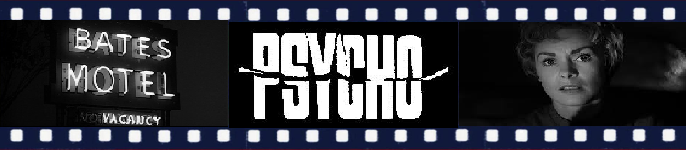
Psycho still makes the cut

Alfred Hitchcock’s Psycho, revived in a spectacular new print at the 1996 Cleveland International Film Festival with co-star Janet Leigh in attendance, is probably the esteemed director’s most famous film, but while it is now hailed as one of his best, the critics were not too enthused about Hitchcock’s low-budget excursion into the genre of horror at the time of its June 1960 release. Whether or not Psycho qualifies as a “horror” film is a matter open to debate, but the film’s macabre elements, and the violent way in which those elements were presented, was regarded as a step down for the portly English director who usually relied on subtlety and suggestion to convey the more unpleasant aspects of his films. While the justly famous “shower scene” is tasteful by today’s standards, in 1960, the amount of blood exposited by the victim was considered gratuitous. But Psycho still has as much to savor in 1996 as it did in 1960.

The most important characteristic of Psycho may be the superb black and white cinematography, the work of John L. Russell who handled the camera work on Hitchcock’s television anthology program. Brooding shadows are expertly captured by Russell’s lens, and his work was deservedly nominated for an Oscar. Although the scenes in which the protagonist, the notorious Norman Bates, dispenses death to his victims are strikingly photographed, Russell’s talents are also represented in less heralded moments, such as the scene in which Marion Crane (Janet Leigh) drives along the road at night while the voices of her co-workers, as well as her victim, are heard questioning her whereabouts and wondering what fate has befallen both Crane and the money she was responsible for depositing. Perhaps the film’s eeriest moment, especially for those who have seen the film before, is when Crane reaches what will be her final destination on a dark, rain splattered night. The wipers clear the rain from the windshield of her car, and suddenly the neon sign bearing the legend, “Bates Motel - Vacancy,” becomes visible.

While the look of the film is important, equal attention must be paid to its sound, particularly the music score by Bernard Herrmann. From the opening moments when the titles (expertly designed by Saul Bass) are slashed away, the composer masterfully conveys the sense of a knife eagerly ripping into human flesh. The Psycho score is music to carve meat by, and the film would suffer as horribly as Norman’s victims without it.

The actors could almost get lost in such an atmosphere but the fine cast performs its chores admirably. Not surprisingly, top honors must go to the late Anthony Perkins. His portrayal of Norman Bates, a character as prone to nervous jitters as he is to severing the nerves of his customers, has been frequently imitated, including by Perkins himself, and invests the film with a neurotic, psychological tone that lifts the film into a class it might not otherwise inhabit. Although she is best remembered for spilling blood, Janet Leigh’s Marion Crane is an effectively realized character, one who shares similarities with Norman. Both are on the run - she, literally, from her past, and Norman from the present and future - and both have secrets. Marion’s secret has to do with the contents of her purse which contains a stack of bills that don’t belong to her. Norman’s secret concerns the contents of his house, a spooky old hilltop mansion overlooking the Bates Motel in which Norman’s long dead mother continues to reside, barking orders and hurtling insults at her wayward son. The remaining cast is populated by some excellent performers: Vera Miles as Marion’s concerned sister, John McIntyre as the sheriff, and particularly Martin Balsam as the doomed private detective, all turn in impressive work, and even John Gavin, more mannequin than actor, is appropriately dull as Marion’s lover.

Hitchcock’s characteristic touches of black humor are very evident in Psycho, most notably in Norman’s hobby - taxidermy. Norman likes to stuff things. Birds. Mrs. Bates? Perhaps. The stuffed birds that adorn the walls of Norman’s office were prophetic, for the master of suspense would, in his next film, offer these members of the animal kingdom an opportunity to stuff themselves by snacking on human heads in 1963’s The Birds, Hitchcock’s last film of special merit. Birds have often been used by Hitchcock to symbolize good (In Foreign Correspondent, the kidnapped dignitary played by Albert Basserman, is extremely fond of birds, and, in one early scene, suggests that even on the eve of a world war, there is still hope for mankind when people still take time to feed them). In Psycho, those ever watchful yet dead eyes seem to represent Norman’s voyeurism, his only mode of sexual expression, not only before the murder of Marion Crane when he watches her undress through a peephole, but throughout the film. When not cutting loose with a kitchen knife, Norman is passive, watching, and seemingly waiting for the kill.

The film deteriorates a little at the end, not as badly as Mrs. Bates whose hollow-eyed corpse hogs a well deserved close-up at the film’s climax, but enough to prevent Psycho from achieving perfection. A lengthy denouement in which a psychologist (Simon Oakland) attempts to explain the motives behind Norman’s behavior is filled with a lot of sophomoric psychology that would be embarrassing if it wasn’t so dull. Rigor mortis sets in at this point, and the scene seems longer than the 108 minute running time of the entire picture. Fortunately, there is a payoff in the final moments when Anthony Perkins returns to the screen for a brief but brilliant moment as both mother and son.

Psycho is an important film, not only in Hitchcock’s filmography, but in film history. For Hitchcock, Psycho is unique and a source of controversy. After a string of big budget, colorful, and often glamorous films (To Catch a Thief, North by Northwest), Hitchcock opted to make Psycho on a minuscule budget, filming almost entirely on the back lot of Universal Studios, using the same crew that worked on his then current television series. (At one point, it is even rumored that the film, having shocked the original distributor, Paramount, almost became a two-part episode of that NBC program.)

Hitchcock was known to brag about his decision to film Psycho in black and white, but there have been those who maintain that Hitchcock had originally planned to shoot in color or, worse, film everything but the shower murder in black and white, then jar the audience with a Technicolor bloodbath, a tacky, unimaginative ploy unworthy of the great director. There is no evidence to support this long circulating rumor, and it is rarely considered except in passing. Not so the claim that Saul Bass, the gifted artist who frequently made contributions to Hitchcock’s films, including the design of the opening title sequences for Psycho and Vertigo, actually directed the much praised shower sequence for which Hitchcock has long taken bows. It continues to inspire denials from all but a small coterie of Bass friends and fans.

Psycho’s reverberations were felt throughout Hollywood. The film’s graphic, for 1960, depictions of violence broke a taboo or two, and after John Carpenter’s 1978 production of Halloween, which owed a debt to Hitchcock's style, Psycho was unjustly implicated in the wave of “splatter” films, such as the Friday the 13th series, that followed in the wake of Halloween’s box- office success. Earlier, in 1961, William Castle, often dubbed “the poor man’s Hitchcock,” offered a blatant rip-off of Psycho in the form of Homicidal, a creepy little thriller that was not bad of its kind, if not deserving of Time magazine’s ten best list, an honor denied Psycho one year earlier.

Finally, Psycho had a profound effect on the career of Anthony Perkins who never shook the image he acquired after portraying the king of cutlery in this legendary film. Perkins had played mentally unbalanced characters before (bipolar baseball star Jimmy Piersall in 1957’s Fear Strikes Out), but he rarely played anything but deranged characters afterward. In addition to reprising Norman in three sequels beginning in 1982, Perkins played many variations on the twitching, psychopathic Mr. Bates in unrelated films. His performance of a warped fashion photographer provided the primary entertainment value in Mahogany, a silly 1975 melodrama starring the insufferable Diana Ross. Perkins also hovered on the verge of hysteria as a demented man of the cloth stalking Kathleen Turner in Crimes of Passion, another of director Ken Russell’s cinematic eccentricities. Few of those films are likely to be singled out for a retrospective showing at the Cleveland International Film Festival, but the festival’s 1996 presentation of Psycho demonstrates that, thirty-six years after he first scared people out of the showers, there is still an appreciative audience for good ol’ Norman Bates.

© 1996 Brian W. Fairbanks


BUY HERE

Sunday, September 15, 2013

Blue Hawaii: Elvis in shorts!

Tour Hawaii with Elvis Presley!!!

That should have been the tagline on the Blue Hawaii poster (instead of “Elvis Presley Rides the Crest of the Wave”). The 1961 musical is less a motion picture than a moving postcard, but it was the King’s biggest box-office hit, the eighth highest grossing film in the year of its release, and a still impressive number 14 the year after. Shockingly, the movie’s soundtrack, littered with the likes of “Ito Eats” and “Slicin’ Sand,” became his most popular album. The RCA Victor LP held down the number one spot on the Billboard chart for 20 weeks, a record that remained unbroken until Fleetwood Mac’s Rumors overtook it in 1977, the year of Presley’s death.

Like all of Presley’s films for Paramount, Blue Hawaii was produced by Hal Wallis. Unlike 1957’s Loving You and 1958’s King Creole which preserved if toned down his rebellious rocker image, Blue Hawaii gave us a tame Elvis that the whole family could safely see together. It would also provide the template for most of the Presley movies to come: a tropical location with lush scenery, bikini-clad cuties, and an LP’s worth of songs, some of them downright ghastly.

It may have represented the start of the downward spiral that Presley’s career would take in the mid-1960s, but Blue Hawaii has its supporters among the faithful. After all, this is the movie that introduced the lovely “Can’t Help Falling in Love,” the song that closed his concerts after he returned to live performing in 1969. The other songs are coated in too much sugar to compete with “Jailhouse Rock,” but they are agreeable in the movie’s setting. There’s also a good cast with Angela Lansbury on hand as Elvis’ mother even though, at age 35, she was only ten years his senior. If Lansbury doesn’t incite lust in the male audience, there are several luscious babes that should do the trick. There’s Joan Blackman for those who like brunettes and Jenny Maxwell for the gentlemen who prefer blondes.

Blue Hawaii is attractive, alright, but it’s also the very definition of fluff. Elvis still had the opportunity to show he had the dramatic chops for a serious acting career (Flaming Star, Wild in the Country), but Blue Hawaii’s massive success, along with his complacent attitude toward Colonel Parker’s mismanagement of his career, guaranteed that the few gems in his filmography would be outnumbered by the likes of Girl Happy, Clambake, and Paradise, Hawaiian Style. If nothing else, Blue Hawaii is the best of that lot.

© 2013 Brian W. Fairbanks


BUY HERE