Showing posts with label Janet Leigh. Show all posts

Tuesday, October 8, 2013

Psycho still makes the cut

Alfred Hitchcock’s Psycho, revived in a spectacular new print at the 1996 Cleveland International Film Festival with co-star Janet Leigh in attendance, is probably the esteemed director’s most famous film, but while it is now hailed as one of his best, the critics were not too enthused about Hitchcock’s low-budget excursion into the genre of horror at the time of its June 1960 release. Whether or not Psycho qualifies as a “horror” film is a matter open to debate, but the film’s macabre elements, and the violent way in which those elements were presented, was regarded as a step down for the portly English director who usually relied on subtlety and suggestion to convey the more unpleasant aspects of his films. While the justly famous “shower scene” is tasteful by today’s standards, in 1960, the amount of blood exposited by the victim was considered gratuitous. But Psycho still has as much to savor in 1996 as it did in 1960.

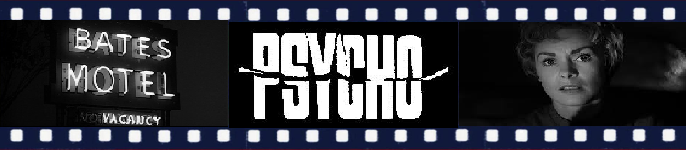
The most important characteristic of Psycho may be the superb black and white cinematography, the work of John L. Russell who handled the camera work on Hitchcock’s television anthology program. Brooding shadows are expertly captured by Russell’s lens, and his work was deservedly nominated for an Oscar. Although the scenes in which the protagonist, the notorious Norman Bates, dispenses death to his victims are strikingly photographed, Russell’s talents are also represented in less heralded moments, such as the scene in which Marion Crane (Janet Leigh) drives along the road at night while the voices of her co-workers, as well as her victim, are heard questioning her whereabouts and wondering what fate has befallen both Crane and the money she was responsible for depositing. Perhaps the film’s eeriest moment, especially for those who have seen the film before, is when Crane reaches what will be her final destination on a dark, rain splattered night. The wipers clear the rain from the windshield of her car, and suddenly the neon sign bearing the legend, “Bates Motel - Vacancy,” becomes visible.

While the look of the film is important, equal attention must be paid to its sound, particularly the music score by Bernard Herrmann. From the opening moments when the titles (expertly designed by Saul Bass) are slashed away, the composer masterfully conveys the sense of a knife eagerly ripping into human flesh. The Psycho score is music to carve meat by, and the film would suffer as horribly as Norman’s victims without it.

The actors could almost get lost in such an atmosphere but the fine cast performs its chores admirably. Not surprisingly, top honors must go to the late Anthony Perkins. His portrayal of Norman Bates, a character as prone to nervous jitters as he is to severing the nerves of his customers, has been frequently imitated, including by Perkins himself, and invests the film with a neurotic, psychological tone that lifts the film into a class it might not otherwise inhabit. Although she is best remembered for spilling blood, Janet Leigh’s Marion Crane is an effectively realized character, one who shares similarities with Norman. Both are on the run - she, literally, from her past, and Norman from the present and future - and both have secrets. Marion’s secret has to do with the contents of her purse which contains a stack of bills that don’t belong to her. Norman’s secret concerns the contents of his house, a spooky old hilltop mansion overlooking the Bates Motel in which Norman’s long dead mother continues to reside, barking orders and hurtling insults at her wayward son. The remaining cast is populated by some excellent performers: Vera Miles as Marion’s concerned sister, John McIntyre as the sheriff, and particularly Martin Balsam as the doomed private detective, all turn in impressive work, and even John Gavin, more mannequin than actor, is appropriately dull as Marion’s lover.

Hitchcock’s characteristic touches of black humor are very evident in Psycho, most notably in Norman’s hobby - taxidermy. Norman likes to stuff things. Birds. Mrs. Bates? Perhaps. The stuffed birds that adorn the walls of Norman’s office were prophetic, for the master of suspense would, in his next film, offer these members of the animal kingdom an opportunity to stuff themselves by snacking on human heads in 1963’s The Birds, Hitchcock’s last film of special merit. Birds have often been used by Hitchcock to symbolize good (In Foreign Correspondent, the kidnapped dignitary played by Albert Basserman, is extremely fond of birds, and, in one early scene, suggests that even on the eve of a world war, there is still hope for mankind when people still take time to feed them). In Psycho, those ever watchful yet dead eyes seem to represent Norman’s voyeurism, his only mode of sexual expression, not only before the murder of Marion Crane when he watches her undress through a peephole, but throughout the film. When not cutting loose with a kitchen knife, Norman is passive, watching, and seemingly waiting for the kill.

The film deteriorates a little at the end, not as badly as Mrs. Bates whose hollow-eyed corpse hogs a well deserved close-up at the film’s climax, but enough to prevent Psycho from achieving perfection. A lengthy denouement in which a psychologist (Simon Oakland) attempts to explain the motives behind Norman’s behavior is filled with a lot of sophomoric psychology that would be embarrassing if it wasn’t so dull. Rigor mortis sets in at this point, and the scene seems longer than the 108 minute running time of the entire picture. Fortunately, there is a payoff in the final moments when Anthony Perkins returns to the screen for a brief but brilliant moment as both mother and son.

Psycho is an important film, not only in Hitchcock’s filmography, but in film history. For Hitchcock, Psycho is unique and a source of controversy. After a string of big budget, colorful, and often glamorous films (To Catch a Thief, North by Northwest), Hitchcock opted to make Psycho on a minuscule budget, filming almost entirely on the back lot of Universal Studios, using the same crew that worked on his then current television series. (At one point, it is even rumored that the film, having shocked the original distributor, Paramount, almost became a two-part episode of that NBC program.)

Hitchcock was known to brag about his decision to film Psycho in black and white, but there have been those who maintain that Hitchcock had originally planned to shoot in color or, worse, film everything but the shower murder in black and white, then jar the audience with a Technicolor bloodbath, a tacky, unimaginative ploy unworthy of the great director. There is no evidence to support this long circulating rumor, and it is rarely considered except in passing. Not so the claim that Saul Bass, the gifted artist who frequently made contributions to Hitchcock’s films, including the design of the opening title sequences for Psycho and Vertigo, actually directed the much praised shower sequence for which Hitchcock has long taken bows. It continues to inspire denials from all but a small coterie of Bass friends and fans.

Psycho’s reverberations were felt throughout Hollywood. The film’s graphic, for 1960, depictions of violence broke a taboo or two, and after John Carpenter’s 1978 production of Halloween, which owed a debt to Hitchcock's style, Psycho was unjustly implicated in the wave of “splatter” films, such as the Friday the 13th series, that followed in the wake of Halloween’s box- office success. Earlier, in 1961, William Castle, often dubbed “the poor man’s Hitchcock,” offered a blatant rip-off of Psycho in the form of Homicidal, a creepy little thriller that was not bad of its kind, if not deserving of Time magazine’s ten best list, an honor denied Psycho one year earlier.

Finally, Psycho had a profound effect on the career of Anthony Perkins who never shook the image he acquired after portraying the king of cutlery in this legendary film. Perkins had played mentally unbalanced characters before (bipolar baseball star Jimmy Piersall in 1957’s Fear Strikes Out), but he rarely played anything but deranged characters afterward. In addition to reprising Norman in three sequels beginning in 1982, Perkins played many variations on the twitching, psychopathic Mr. Bates in unrelated films. His performance of a warped fashion photographer provided the primary entertainment value in Mahogany, a silly 1975 melodrama starring the insufferable Diana Ross. Perkins also hovered on the verge of hysteria as a demented man of the cloth stalking Kathleen Turner in Crimes of Passion, another of director Ken Russell’s cinematic eccentricities. Few of those films are likely to be singled out for a retrospective showing at the Cleveland International Film Festival, but the festival’s 1996 presentation of Psycho demonstrates that, thirty-six years after he first scared people out of the showers, there is still an appreciative audience for good ol’ Norman Bates.

© 1996 Brian W. Fairbanks


BUY HERE

Friday, August 23, 2013

Anthony Hopkins as Hitchcock

Anthony Hopkins drawls his dialogue and wears a fat suit, but it’s not his fault that he sounds and looks nothing like Hitchcock, the legendary Master of Suspense.

Covering the period when the portly director was making 1960’s Psycho, you have to wonder how much is true and how much was fabricated by screenwriter John J. McLaughlin and director Sacha Gervasi. This is the stuff of a great documentary, but might require some tweaking for a dramatic film.

Based on Stephen Rebello’s Alfred Hitchcock and the Making of Psycho, the film suggests that everything was at stake, including the revered director’s reputation, as he becomes fixated on making a low-budget, black-and-white shocker from Robert Bloch’s novel, inspired by the true story of killer Ed Gein. Paramount, the studio with which Hitchcock was aligned, had already issued Rear Window, The Man Who Knew Too Much, and Vertigo, but studio head Barney Balaban was not pleased with Psycho’s grisly subject matter, and the studio agreed only to distribute the film providing Hitchcock financed it himself.

Some of the tweaking is kind of silly, such as having Gein’s ghost appearing to Hitchcock. It brings to mind True Romance in which Christian Slater gets helpful hints from the spirit of Elvis Presley. Since Elvis was probably at Paramount preparing for G.I. Blues at the time that Psycho was being edited, why wasn’t he given a cameo? He could have popped in to congratulate Anthony Perkins on his version of “Moonlight Swim” a song that the Psycho star had recorded (on one of several albums issued during his “teen idol” phase) which Elvis later covered in Blue Hawaii.

A lot of the drama relates to Hitchcock’s relationship with his wife, Alma, played by Helen Mirren. Was she having an affair with a hack screenwriter? Hitchcock suspects as much. Would she give her full support to Psycho? And what about Hitchcock’s weird obsession with his leading ladies, those cool blondes like Janet Leigh, very convincingly portrayed by Scarlett Johanssen, or Vera Miles (Jessica Biel), who he had been grooming for the lead in Vertigo, but who “betrayed” him by getting pregnant and choosing her family over stardom?

Hitchcock is good fun for film buffs, and, perhaps, a slice of movie history for the younger viewer, though some of what they’ll learn is not the truth. In the film, Hitchcock’s agent boasts that “I made a millionaire out of Jimmy Stewart with Winchester 73 and that film was a dog.” Hardly. Winchester 73, directed by Anthony Mann, is one of the great westerns, and, like his collaborations with Hitchcock, among Stewart’s best.

© 2013 Brian W. Fairbanks


BUY HERE

Friday, June 7, 2013

The Manchurian Candidate (1962)

There is a moment in The Manchurian Candidate when Frank Sinatra, playing a major in the United States Army, wakes from a nightmare and screams twice. His face beaded with perspiration, Ol’ Blue Eyes offers what may be the most unbelievable moment in the film. That’s quite a compliment considering that this classic John Frankenheimer directed thriller, which he co-produced with screenwriter George Axelrod, was at one time labeled "science-fiction." Its bizarre plot was a bit much for the American moviegoers of 1962 who were still a year and a half away from their introduction to James Bond, the super secret agent whose early screen exploits were mundane compared to what occurs in The Manchurian Candidate. Today, of course, this film based on a novel by Richard Condon (Prizzi’s Honor) doesn’t require stretching the imagination more than an inch or two.

The year is 1952. Several American soldiers fighting in Korea are abducted, taken to Manchuria, and, over a period of three days, are brainwashed, one of them, Raymond Shaw (Laurence Harvey), programmed to be an assassin. Returning to the U.S., Shaw is a hero who, it is believed, performed courageously on the battlefield by saving the lives of some of his men. Major Marco (Sinatra), who supports the sterling accounts of Shaw’s performance, nonetheless has doubts about their accuracy, his skepticism resulting from the nightmares he’s been having in which he and Shaw and several of their fellow soldiers are present at a meeting of a ladies club. It’s an innocuous dream except for two things: every once in awhile those ladies look like Koreans, and Shaw strangles another soldier. Marco isn’t the only man in Shaw’s company being tormented by nightmares and, soon enough, the origin of the dream is discovered.

Shaw is a tragic figure, a man manipulated by his evil mother (Angela Lansbury), a Communist agent who is also manipulating the political career of her husband, an obnoxious "right winger" bearing a resemblance to Senator Joseph McCarthy. Their hold on Shaw is enforceable when they mention the game of solitaire, at which point he is hypnotized. Once he comes across the queen of diamonds, he can be ordered to kill, which he does with an eerie proficiency. His ultimate assignment will be to assassinate the Republican nominee for president to provide his stepfather, the vice presidential nominee, with a shortcut to the White House.

Whether or not one believes that an individual’s free will can be so thoroughly usurped, during The Manchurian Candidate’s 126 minutes you will likely believe anything, except, of course, Sinatra’s screams. Though Angela Lansbury won a best supporting actress nomination for her evil bitch of a mother, there are equally fine characterizations from James Gregory and John McGiver. Top honors must go to Laurence Harvey, however, who superbly enacts the role of a man who seems spellbound by some inner demon even when not deprived of his free will.

Brian W. Fairbanks

© Copyright 1999, Brian W. Fairbanks. All Rights Reserved.

FOOTNOTE:The Manchurian Candidate is fiction, of course, and so is the still circulating story that the film was "suppressed" following the November 22, 1963 assassination of President John F. Kennedy. The story claims that Frank Sinatra, a co-producer of the film, had it withdrawn from circulation upon learning that alleged assassin Lee Harvey Oswald may have seen and been influenced by the film.

Not true!

The Manchurian Candidate made its American television debut as the premiere attraction on The CBS Thursday Night Movies in September 1965 and was repeated on that network in 1966 before being leased by its distributor, the still flourishing United Artists, to NBC in a package of films that had already played on competing networks.

Among the titles joining The Manchurian Candidate for third and fourth go-rounds on the peacock network were The Great Escape, Elmer Gantry, One, Two, Three, I Want to Live, A Shot in the Dark, Love Is A Ball, and The Defiant Ones. NBC took its time scheduling these titles but most appeared throughout 1971-1975. The Manchurian Candidate aired on NBC in spring 1974 (at which time it merited a "Close-Up" in TV Guide), and again in summer 1975. Shortly afterward, the rights reverted from UA to Sinatra, and the film fell through the cracks, no longer available due to the crooner's neglect in keeping the film in distribution.

It was during the '80s that the legend concerning its disappearance began to take hold. It may have been the legend that inspired Sinatra to strike a deal with the original distributor, by then overtaken by MGM and known as MGM-UA, and re-release the film to theaters where it made a tidy profit in 1988 before being marketed on home video.


BUY HERE